
Robert Louis Stevenson: A Reader's First Steps
An introduction to the Scottish writer's shorter and lesser-known works held in this library, and where a newcomer might sensibly begin.
Robert Louis Stevenson was a Scottish novelist, essayist, poet and travel writer. He is best known for the novels Treasure Island, Strange Case of Dr Jekyll and Mr Hyde, and Kidnapped, and for the poetry collection A Child's Garden of Verses. Those famous titles are not the ones held in this library, and that is no bad thing for a new reader: the works gathered here show the range of a writer who moved easily between story, essay and verse.
What he wrote
The books on this site cover several sides of Stevenson's output. There are short allegorical tales in the classical fable form, which blend a moral point with philosophical reflection. There is a comedy mystery, The Wrong Box, written with his stepson Lloyd Osbourne, in which two elderly brothers become entangled in a case of mistaken identity over a missing corpse. Prince Otto is a novel set in a small fictional European principality, following the personal and political troubles of its ineffectual prince.
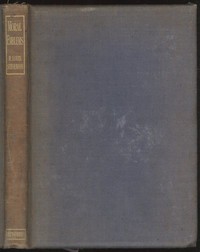
His non-fiction and verse are here too. Memories and Portraits collects autobiographical and reflective essays, recalling people, places and experiences from his life alongside his thoughts on writing. Moral Emblems gathers short comic verses, each paired with his own woodcut illustration and originally produced on a small hand press. Ballads collects narrative poems that retell legends drawn from Polynesian and Scottish traditions.
- Short fiction: Fables, allegorical tales in the classical form
- Comic mystery: The Wrong Box, a case of mistaken identity
- Literary fiction: Prince Otto, a Romance
- Personal essays: Memories and Portraits
- Verse: Moral Emblems and Ballads
Where to start
For a reader who has never opened Stevenson, Fables is a good first door. The tales are short, so the collection can be read in pieces rather than in one long sitting, and each one is complete in itself. The form joins a plain moral point to a more searching, philosophical turn of thought, which gives a fair sense of how Stevenson works on the page without asking for a long commitment. It also sits close to his gift for storytelling, the quality that made his longer adventures well known, while remaining approachable for someone testing the water.
From there, the path can branch according to taste. Readers who want a longer narrative and some Victorian humour can turn to The Wrong Box, while those drawn to Stevenson the man will find him reflecting on his own life and craft in Memories and Portraits. Readers who prefer verse have both the light, illustrated comedy of Moral Emblems and the legend-telling of Ballads to choose between. Each is a different way into the same wide-ranging writer.
The books, free to read
More from the reading desk
Browse all →
Charles Dickens: A First Reader's Guide
An introduction to the Victorian novelist and journalist, and where a newcomer to his shorter works can begin.
The Power of Concentration by William Walker Atkinson
A practical manual of mental exercises that treats concentration as a skill to be trained lesson by lesson.
Robert Louis Stevenson's Fables: A Reader's Orientation
A short collection of moral tales, arguments dressed as stories, and one meeting with characters from Treasure Island.
Seven Short Books from the Literature Shelf
A reading list of seven public-domain works — fiction, a novella, and one practical guide — for readers who want something substantial to carry in short sittings.