
ABC's of Science: A Homemade Cosmos in Numbered Verses
A short book that lays out an entire theory of the universe in numbered sentences, driven by one idea it repeats everywhere: magnetism and flourishment.
This is a very small book with a very large subject. In seven short chapters, Charles A. Oliver sets out to explain nature, the stars, the solar system, the earth, and the origin of living things — including man. It is not a textbook in the ordinary sense, nor an argument that builds its case paragraph by paragraph. It is a set of numbered statements, each one asserted plainly and left to stand, as if the author were dictating the settled facts of creation to a scribe.
The word to watch is "flourish." It runs through the whole book and does a great deal of work: plants flourish, animals flourish, the earth itself reaches a state in which life flourishes. Oliver even treats its absence as a kind of loss distinct from death. In his account of reproduction he writes a line that captures the flavour of the whole thing:
Reproductions in all families that flourish; some families mix and their offspring will not reproduce. (Life cannot be destroyed, but flourishment can.)
CHAPTER V FLOURISHMENT OF THE EARTH
The shape of the book
Everything is numbered. Chapters open with a first sentence, a second, a third, and the numbering carries the reader along in place of connecting prose. This gives the book a curious authority — it reads like a list of laws — but it also means there is almost no argument to follow. Claims are laid down rather than shown. The opening chapter is the purest example: eight lines that divide all of nature into Mineral, Vegetable, and Animal, each split again into Matter and Magnetism, and then close the door on further inquiry with the flat assertion that the kinds of magnetism are 'beyond the strength of human to classify.'
The private system behind the book surfaces in its vocabulary. Planets and moons are an 'obsequious attendant' of the body they circle; nebulae are 'Suck, or Nebula, currents'; space is filled with 'unmaterial and material life,' the unmaterial pushing the material along in currents. This is not the language of any observatory. It is one man's homemade physics, and part of what makes the book readable is watching how consistently he applies his own terms.
What dates it, and what does not
Some of the astronomy is simply of its period, and a reader in India today will notice it at once. Oliver reports the solar system as having eight major planets and lists confident figures — the sun's diameter at 866,000 miles, Mercury with 'a suitable amount of vapor for animals and vegetables to flourish.' The chapter on the origin of man is stranger still, and reflects ideas about separate human 'branches' that a modern reader will read as an artefact of when it was written. The comet drawings that open the book, one of them tied to a prophecy that the earth would end, place it firmly in an age of naked-eye wonder at the sky.
What does not date is the human impulse on show: the wish of one person to hold the whole of creation in a single small scheme and write it down. That ambition reads the same in any century.
Who it will reward, who it will bore
- Readers curious about outsider and self-published thought — how a private mind orders the universe when it works alone.
- Anyone interested in the history of popular science, and in what confident-sounding 'facts' looked like before they were checked.
- Readers who enjoy odd, aphoristic texts that can be opened at any numbered line.
It will bore anyone hoping to actually learn astronomy or biology; the science is wrong or unverifiable and stated without support. And because there is no story and little connective argument, a reader wanting to be carried along will find the numbered lines abrupt and dry. It is short, which is a mercy, and best read as a curiosity rather than a course of study — a window onto one man's certainty about everything.
The book, free to read
More from the reading desk
Browse all →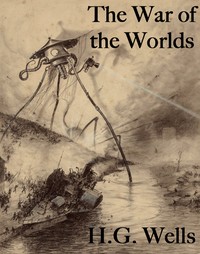
Empire, Settlement, and Self-Government: A Reading List for Independence Day
Eight books from the collection, read in a line that runs from the machinery of empire to the arguments a new nation makes for itself.
Henry Graham Dakyns: The Voice of Xenophon in English
A British translator who brought the histories, dialogues and treatises of the ancient Greek writer Xenophon into readable English.
An Introduction to Oscar Wilde
A guide to the Irish playwright, poet and essayist for readers meeting his work for the first time, with a suggestion on where to begin.

Charles Dickens: A First Reader's Guide
An introduction to the Victorian novelist and journalist, and where a newcomer to his shorter works can begin.