Empire, Settlement, and Self-Government: A Reading List for Independence Day
Eight books from the collection, read in a line that runs from the machinery of empire to the arguments a new nation makes for itself.
The XtreamFm Library desk·10 August 2026·1 min read·History
Independence is the occasion for this list, not its subject; the subject is a handful of books already on the shelves here. Read together and in order, they move from the assumptions of empire, through the ground-level work of settling and belonging on land far from any capital, to the written arguments a people makes when it decides to govern itself. None of them is about India, and that is part of the point: the questions of who rules, who is displaced, and who gets counted as a full member of a community turn up in stories that never mention it. What follows is one way to walk through them.
The thread that holds these eight together is not a shared plot but a shared set of pressures: the confidence of the powerful, the labour of ordinary settlement, the weight of an inherited past, and the moment when people sit down to write the rules they will live under. Any one of these books can be picked up on its own from its page on this site. Placed in sequence, they read like a long argument about what it costs to be governed and what it takes to govern oneself.
Empire, Settlement, and Self-Government: A Reading List for Independence Day
10 slides
1 / 10
Begin with the confidence of empire
Wells opens his invasion story by describing a species so sure of its dominion that it never imagines being watched, let alone overthrown. The book's most famous idea is that the powerful notice the powerless about as much as a man notices creatures in a drop of water.
"serene in their assurance of their empire over matter"
The complacency described is the emotion an imperial century runs on
The same novel then does the reversal: the assured society collapses under a force it had not thought worth considering. Read on Independence Day, it is a study of how quickly the confidence of the strong can become the panic of the overrun.
An unnamed narrator watches English society come apart
The book asks what empire feels like from the losing side
From invasion, turn to settlement. Cather's novel about the Nebraska prairie begins with a town that can barely hold its ground against the wind, its houses looking as though they might blow away overnight.
"the little town of Hanover, anchored on a windy Nebraska tableland, was trying not to be blown away"
Alexandra Bergson, a Swedish immigrant, inherits and works the family farmland
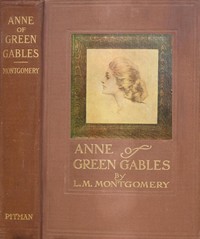
Montgomery's first Anne book plants a mistakenly-sent orphan on Prince Edward Island and watches her earn a place there. It is the quieter side of settlement: the work of making a stranger into a member of a household and a village.
Anne Shirley arrives where a boy was expected
The community is one that keeps a sharp eye on everything that passes
In the second book the same girl, now "half-past sixteen," is teaching the district's children and reckoning with a difficult neighbour. Belonging has moved from being tolerated to carrying responsibility for others.
Anne begins teaching in Avonlea
The outsider is now part of how the place governs itself
The third book sends Anne away to Redmond College to weigh friendship, study, and where she belongs. Settlement is not only staying put; it is the freedom to leave and choose to return.
"Harvest is ended and summer is gone"
Questions of love and belonging are worked out at a distance from home
Settlement carries inheritance, and inheritance carries debts. Hawthorne's New England house stands under an old curse, and the Pyncheon family cannot get free of guilt handed down with the property.
The novel weighs guilt, inheritance, and the weight of the past
A useful counterweight to the pioneer's clean-slate story
Hawthorne's Puritan novel shows a settled society deciding, in public, whom to shame. Hester Prynne wears a scarlet letter so a whole town can read her offence off her body. Every new community also invents its rules of exclusion.
The book frames itself with an autobiographical impulse and a Custom-House
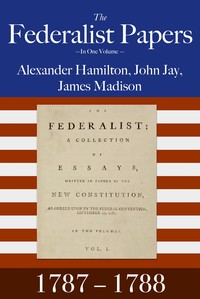
The line ends where a people argues, in writing, over the government it will accept. The Federalist essays were composed to persuade a doubtful public to ratify a proposed constitution, and they open by stating exactly what is at stake.
"you are called upon to deliberate on a new Constitution"
The essays put the question of reflection and choice against mere accident and force
Taken in order these books run from the assurance of empire, through the labour of settling and belonging, past the guilt that inheritance carries, to the moment a people writes its own rules. Each is free to read here, and each stands on its own.
Start anywhere; the sequence is a suggestion, not a syllabus
None mentions India, yet each turns on who rules and who is counted