
Alice's Adventures in Wonderland: A Reader's Review
A dream-logic children's book whose talking animals and shifting sizes still read as strange, though its Victorian schoolroom jokes have faded.
Alice's Adventures in Wonderland follows a girl who, bored on a riverbank, chases a waistcoated White Rabbit down a hole and into a country that runs on its own rules. Across twelve short chapters she grows and shrinks, argues with animals and royalty, attends a tea-party that never ends, and finally sits through a trial. There is no quest and no lesson to reach. The pleasure, and sometimes the tedium, is in the sequence of encounters.
The texture: talk, not action
Very little happens in the ordinary sense. The book is built almost entirely from conversation, and its comedy comes from characters taking words with a flat, maddening literalness. When the March Hare offers wine that is not there, and Alice objects, the exchange runs to the point that offering nothing is uncivil — and then the Hatter, with no bridge at all, tells her her hair wants cutting. That is the rhythm throughout: a reasonable child pressing for sense against creatures who answer with rules that only sound like rules.
Carroll is precise about the disorientation of changing size, and he lets Alice feel it from the inside rather than describing it from outside.
“I—I hardly know, sir, just at present—at least I know who I was when I got up this morning, but I think I must have been changed several times since then.”
CHAPTER V. Advice from a Caterpillar
That line does more than the plot does. The book keeps returning to the question of whether Alice is still herself when everything about her keeps shifting, and it treats a child's confusion as a real subject rather than a joke at her expense.
What dates it and what does not
Some of the humour assumes a reader who has been drilled in a Victorian English schoolroom. The Mouse's cure for wet fur is to recite the driest thing it knows — a passage of English history beginning with William the Conqueror — a joke that lands only if that recitation is already familiar and tedious to you. A reader in India today, or anywhere outside that classroom, will see the shape of the joke without feeling its point. The croquet, the caucus, the quadrille and the parodies of once-common verses sit in the same category: period furniture whose comic charge has mostly drained away.
What has not dated is the logic. The Duchess insisting that everything has a moral, and Alice's mild heresy that perhaps some things do not, is an argument that still bites, because it is about the human habit of forcing meaning onto whatever passes.
“Perhaps it hasn’t one,” Alice ventured to remark.
CHAPTER IX. The Mock Turtle’s Story
Who it will reward, who it will bore
It rewards readers who enjoy language for its own sake — the puns, the mock-arguments, the deadpan absurdities — and readers happy to drift without a destination. It is genuinely short and can be read in an afternoon.
- Rewards: readers who like wordplay, dream-logic and character over plot; adults revisiting it as much as children meeting it.
- May bore: readers who want a story that builds, a stake, or a resolution; the book keeps resetting to a new odd room.
- Uneven by design: some chapters (the Caterpillar, the tea-party) are sharp; others lean on parodies and references that now need footnotes.
Read it, then, not for what happens but for how it talks. The strangeness is real and holds up; the specific jokes are of their period and some have gone quiet. Come for the logic and the voice, not the plot, and it is still worth the afternoon it asks for.
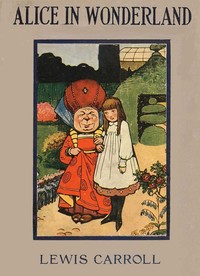
The book, free to read
More from the reading desk
Browse all →
Empire, Settlement, and Self-Government: A Reading List for Independence Day
Eight books from the collection, read in a line that runs from the machinery of empire to the arguments a new nation makes for itself.

Henry Graham Dakyns: The Voice of Xenophon in English
A British translator who brought the histories, dialogues and treatises of the ancient Greek writer Xenophon into readable English.
An Introduction to Oscar Wilde
A guide to the Irish playwright, poet and essayist for readers meeting his work for the first time, with a suggestion on where to begin.
Charles Dickens: A First Reader's Guide
An introduction to the Victorian novelist and journalist, and where a newcomer to his shorter works can begin.