
Dracula: A Novel Told Entirely in Documents
Bram Stoker's horror story is assembled from journals, diaries and news cuttings, and reads slower and stranger than its reputation suggests.
Dracula is a horror novel that almost never lets you watch events directly. It is built out of documents—private journals, a doctor's diary, a cutting from a newspaper, entries dictated onto a phonograph—each one written after the fact by a character setting down what has already happened. The book's twenty-eight chapters are labelled by their source: "JONATHAN HARKER'S JOURNAL," "MINA MURRAY'S JOURNAL," "DR. SEWARD'S DIARY." The effect is that you are always reading a report, never standing in the room. This is the single most important thing to know before you begin, and it shapes everything about how the book feels.
The texture: careful, reported, obsessed with accuracy
Because every narrator is writing things down, the prose is full of people promising to be precise. Dr. Seward opens one of the later chapters this way:
Let me put down with exactness all that happened, as well as I can remember it, since last I made an entry. Not a detail that I can recall must be forgotten; in all calmness I must proceed.
CHAPTER XXI DR. SEWARD'S DIARY
That anxious, orderly voice is the book's default register. It gives Dracula its odd flavour: the horror is delivered by rational people trying to keep records straight while the ground moves under them. It also means the scary things arrive wrapped in method. When Seward describes finding Renfield injured, he does not scream; he notes that there "seemed none of that unity of purpose between the parts of the body which marks even lethargic sanity," and lets an attendant supply the plain diagnosis that the man's back is broken. The clinical distance is deliberate, and for some readers it will be more unsettling than a direct account; for others it will feel like being held at arm's length from the very scenes they came for.
The shape: fast at the edges, patient in the middle
The opening chapters, Harker's journey east, move quickly and with real momentum—a traveller keeping notes as he crosses from the familiar into somewhere he does not understand. But the long central stretch, largely Seward's diary and the illness of Lucy Westenra, is slower and more circular. Characters wait, watch, doubt each other, and repeat their fears. The suspense comes less from action than from watching sensible people refuse to believe what they are seeing. A reader who wants pace will find the middle heavy going; a reader who enjoys dread built by accumulation will find it the strongest part of the book.
What has aged is easy to spot. The women are idealised in a way that now reads thin—Lucy is "sweeter and lovelier than ever"—and Van Helsing, the foreign professor who leads the group, speaks in an accented, broken English that the book treats as charming. The novel is also densely stitched with references its first readers would have caught at once, from Ophelia to Scott's "Marmion," and it assumes you share them.
Who it will reward, who it will bore
- Reward: readers who like the slow build of atmosphere, and who enjoy the puzzle of an event pieced together from several unreliable first-hand accounts.
- Reward: anyone curious about the source behind a century of vampire films, who wants to see how much of that imagery is already here and how much is later invention.
- Bore: readers wanting fast, continuous action or a single close narrator to inhabit.
- Bore: readers with little patience for period sentiment about virtue, or for a story that keeps stopping to have its characters write it down.
Dracula is not the lean thriller its reputation implies. It is a patient, document-driven novel that trusts the slow assembly of evidence to frighten you, and it is very much of its period in its manners and its morals. Read on its own terms, it still works—but the terms are particular, and worth knowing in advance.
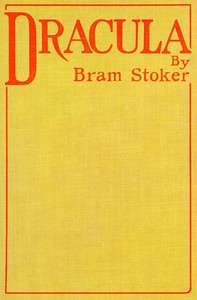
The book, free to read
More from the reading desk
Browse all →
Empire, Settlement, and Self-Government: A Reading List for Independence Day
Eight books from the collection, read in a line that runs from the machinery of empire to the arguments a new nation makes for itself.

Henry Graham Dakyns: The Voice of Xenophon in English
A British translator who brought the histories, dialogues and treatises of the ancient Greek writer Xenophon into readable English.
An Introduction to Oscar Wilde
A guide to the Irish playwright, poet and essayist for readers meeting his work for the first time, with a suggestion on where to begin.

Charles Dickens: A First Reader's Guide
An introduction to the Victorian novelist and journalist, and where a newcomer to his shorter works can begin.