
Kenilworth by Walter Scott: A Book Note
An orientation to Scott's Elizabethan novel of a hidden marriage, a scheming courtier, and the great festivities at Kenilworth Castle.
Kenilworth is a historical novel by Sir Walter Scott, set in the England of Queen Elizabeth's court. It follows the fortunes of a Countess named Amy, her husband the Earl, and the men who move around them, among them the persistent Varney and the Countess's faithful attendant Janet. The action turns on a marriage kept concealed, the pressures of rank and reputation, and the splendour of court life, and it moves toward the princely festivities held at Kenilworth Castle from which the book takes its name.
How the book is arranged
On this site the book opens with a front page and an INTRODUCTION, followed by thirty-eight numbered chapters running from CHAPTER I to CHAPTER XXXVIII in the stored list. The book's own contents page lists further chapters and a set of NOTES at the end, so a reader working through it will find a long narrative divided into short, self-contained chapters. Each chapter opens with a verse epigraph, several drawn from old plays and from Beaumont and Fletcher, which sets the mood before the scene begins.
The narration is unhurried and often addresses the reader directly about its own method. At Kenilworth, for instance, Scott pauses to say that he does not mean to give every detail, and leans on an earlier eyewitness account of the celebrations rather than inventing his own.
What to expect, and who it suits
The opening chapters establish the world of taverns, servants and watchful courtiers before drawing the private drama into view. A representative early scene shows the Countess greeting the Earl she has been waiting for:
“Thou art like the rest of the world, Amy,” said the Earl, suffering her to prevail in the playful contest...
CHAPTER VII.
From that warmth the book gradually darkens. Later chapters bring watchers keeping vigil through the night, a heroine in real distress, and grand public ceremony held up against private fear. Scott's prose is patient and descriptive, with long sentences and period diction, and readers should expect to give it time rather than speed.
This book suits a reader who enjoys historical fiction with a strong sense of place, court intrigue, and characters caught between loyalty and ambition. Those who like their chapters short, framed by verse, and rich in description of halls, torches and pageantry will find much to hold them. Readers who prefer quick, plain modern prose may find the pace deliberate.
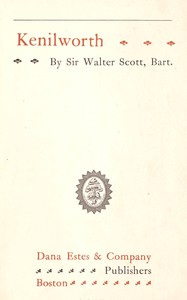
The book, free to read
More from the reading desk
Browse all →
Empire, Settlement, and Self-Government: A Reading List for Independence Day
Eight books from the collection, read in a line that runs from the machinery of empire to the arguments a new nation makes for itself.

Henry Graham Dakyns: The Voice of Xenophon in English
A British translator who brought the histories, dialogues and treatises of the ancient Greek writer Xenophon into readable English.
The Amazing Interlude: A Wartime Romance With a Stage-Set Frame
Mary Roberts Rinehart follows a sheltered young woman who runs a blockade into the war zone and comes home changed, if unevenly told.

An Introduction to Oscar Wilde
A guide to the Irish playwright, poet and essayist for readers meeting his work for the first time, with a suggestion on where to begin.