
William Ernest Henley's Poems: A Reader's Orientation
A poetry collection whose long opening sequence is set inside a hospital, followed by songs, sketches, and a run of ballades.
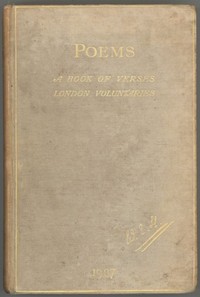
This is a collection of verse by William Ernest Henley, gathered under the plain title Poems. Its front matter names the London publisher David Nutt and records that the book went through many printings, the tenth of which is the copy behind this edition. Beyond that publishing history, the volume is best approached simply as a set of poems, arranged in a deliberate order that this note will describe.
How the book is arranged
The forty stored chapters fall into distinct groups. The first stretch is a numbered sequence, running from an opening titled ENTER PATIENT through pieces such as WAITING, OPERATION, VIGIL, and DISCHARGED, with portraits of hospital figures along the way: STAFF-NURSE: OLD STYLE, LADY-PROBATIONER, HOUSE-SURGEON, and one simply called ‘THE CHIEF’. This is poetry drawn from the world of the sickroom and the ward, observed closely and at length.
After an ENVOY addressed to Charles Baxter, the book opens out into other subjects and forms. There are titles like THE SONG OF THE SWORD and ARABIAN NIGHTS’ ENTERTAINMENTS, and the collection closes with a run of ballades, several of them marked as double refrain or double ballade, on themes named in their titles: youth and age, dead actors, truisms, life and fate.
- A long numbered sequence set in and around a hospital
- Short songs and sketches, some with Japanese and seafaring settings
- A concluding group of ballades in strict, repeating forms
What to expect from the reading
Henley moves between very different registers. One piece, XXI ROMANCE, is a sailor's tale told in a rolling, spoken rhythm, complete with a ragged marching squad: ‘And the drum was rolling Dixie, / And they stepped to it like men, sir!’ Elsewhere the mood is quieter and more solitary, as in a summer-midnight poem where a passer-by hears music from a lit window and then is left with the sea for company.
The blind goes out, and I wander To the old, unfriendly sea, The lonelier for the memory That walks like a ghost with me.
XXVI
That combination is a fair sample of the whole: brisk, dramatic voices in some poems, and a lonelier, more inward note in others. The book suits a reader willing to follow a poet across changing subjects and forms, from the ward to the wharf to the tightly patterned ballade, rather than one looking for a single continuous story. Because the hospital sequence comes first and is numbered as a set, it makes a natural entry point, and the later songs and ballades can be sampled in any order.
The book, free to read
More from the reading desk
Browse all →
An Introduction to Oscar Wilde
A guide to the Irish playwright, poet and essayist for readers meeting his work for the first time, with a suggestion on where to begin.

Dreams and Dust: Don Marquis in a Grave Mood
A collection of poems that swings between war reportage, metaphysical doubt and mannered ornament, rewarding patience more than casual reading.

Seven Books from the Poetry Shelf
A reading list of seven poetry collections and long poems from the XtreamFm Library, from Shakespeare's narrative verse to Eliot's fragmented modern city.

Empire, Settlement, and Self-Government: A Reading List for Independence Day
Eight books from the collection, read in a line that runs from the machinery of empire to the arguments a new nation makes for itself.